TP4056 Lithium Battery Charger Module with Protection
Official Store Deal
Expert Analysis Overview
The TP4056 Lithium Battery Charger Module is a compact, integrated charging solution designed for single-cell 18650 lithium-ion batteries, catering to hobbyists and repair technicians. This module offers both Micro USB and Type-C input options, providing flexibility for various power sources. It is a critical component for DIY power banks, portable electronics, and restoring functionality to devices with depleted or damaged charging circuits. The board integrates essential protection features, distinguishing it from simpler charging-only modules.
The module's central component is the TP4056 lithium battery charging processor. This dedicated IC manages the entire charging cycle, ensuring a safe and efficient process. It operates on a constant-current/constant-voltage (CC/CV) charging algorithm, which is the industry standard for lithium-ion cells. This method prevents overcharging, a common cause of battery degradation and safety hazards.
The TP4056 chip precisely controls the charging current. It delivers up to 1A of charging current, suitable for most 18650 cells. This current level balances charging speed with battery longevity, avoiding excessive heat generation that can shorten battery life. The charging process is visually indicated by onboard LEDs, simplifying status monitoring.
Compared to basic resistor-limited charging circuits, the TP4056 offers intelligent charge management. It automatically terminates charging when the battery reaches 4.2V, preventing overvoltage. This precision extends the lifespan of connected batteries, a significant advantage for long-term projects.
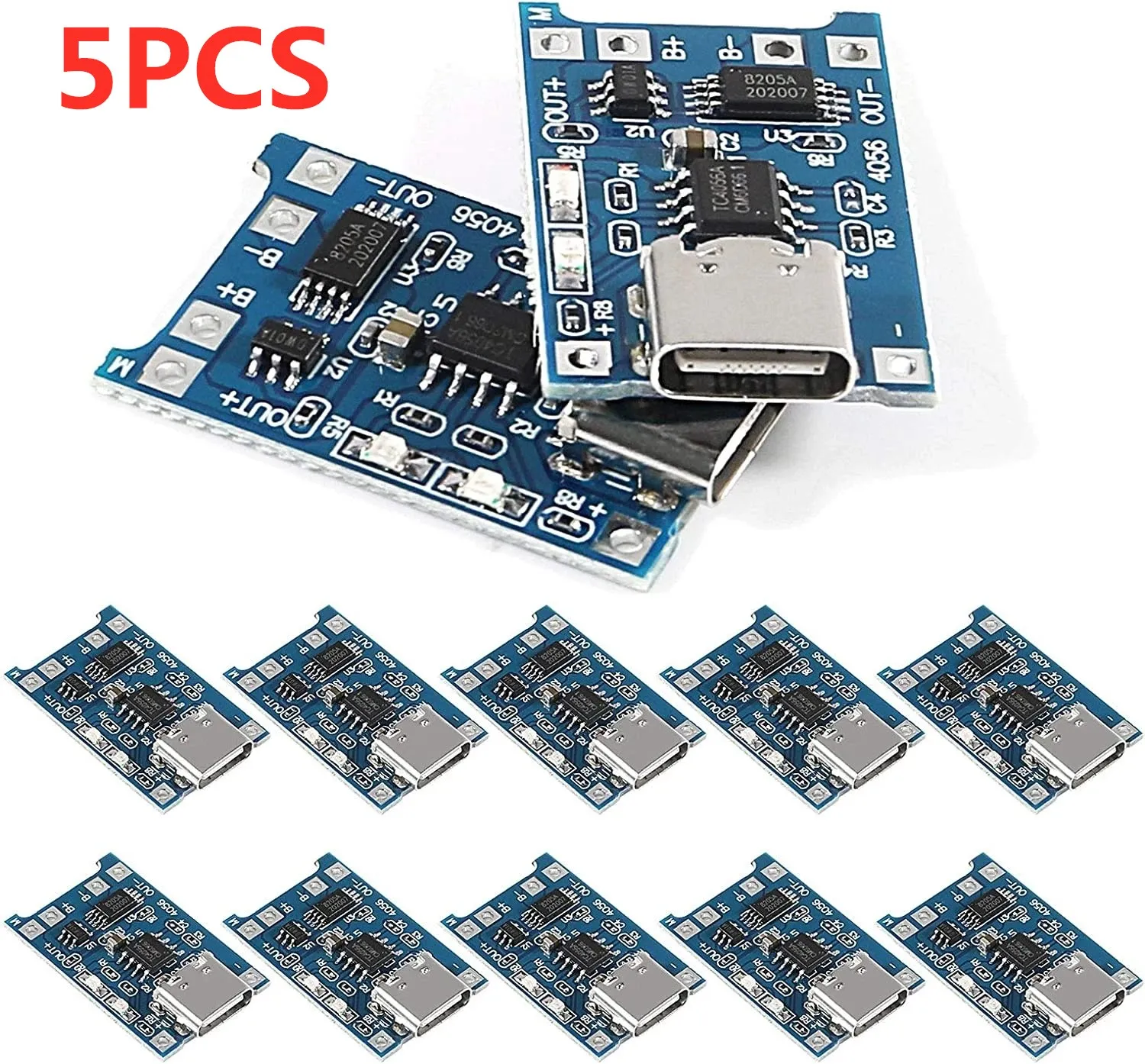
Beyond basic charging, this module incorporates crucial battery protection. It features an 8205A Dual Power MOSFET and a DW01A Lithium Battery Protection Circuit. These components work in tandem to safeguard the battery against common electrical faults. This is a vital upgrade.
The DW01A circuit monitors battery voltage and current. It provides protection against over-discharge, preventing the battery voltage from dropping below a safe threshold (typically around 2.5V). Over-discharging can permanently damage lithium-ion cells, rendering them unusable. This protection extends battery health.
Furthermore, the 8205A MOSFET acts as a disconnect switch. It cuts off the load if an over-current condition occurs, protecting both the battery and the connected device. This prevents short circuits and excessive current draw, which can lead to overheating or even fire. Such integrated safety features are often absent in cheaper, unprotected charging boards, making this module a more reliable choice for sensitive applications.
The availability of both Micro USB and Type-C input ports enhances the module's versatility. Users can select the version that best fits their existing cable infrastructure. Micro USB remains prevalent in many older devices and accessories, while Type-C offers reversible connectivity and is becoming the new standard.
This dual-port strategy simplifies integration into various projects. If a repair involves replacing a damaged charging port, having both options available ensures compatibility. The input voltage range for these modules is typically 4.5V to 8.0V, accommodating standard 5V USB power adapters. This broad compatibility makes sourcing power convenient.
Unlike modules limited to a single, often proprietary, input, these boards offer broad compatibility. This flexibility reduces the need for specialized cables or adapters, streamlining the repair or build process. The robust soldering of the USB ports is visible, suggesting a durable connection point for frequent use.
The module's small dimensions are a significant advantage for space-constrained applications. Its compact footprint allows it to be easily integrated into custom enclosures, portable devices, or existing circuit boards. This is a tiny board.
For repair scenarios, the small size facilitates discreet placement within a device. It can replace a faulty charging circuit without requiring extensive modifications to the device's original layout. This makes it ideal for restoring functionality to small electronics where internal space is at a premium.
Compared to bulkier power management ICs or discrete component solutions, these modules offer a pre-assembled, tested solution. This reduces design complexity and assembly time for DIY projects. The clearly labeled solder pads for battery and output connections further simplify wiring, ensuring straightforward integration.
The TP4056 module consistently delivers its rated 1A charging current. This ensures a reasonable charging time for 18650 batteries, typically charging a 2000mAh cell in approximately two hours. The charging efficiency is high, minimizing energy loss as heat.
Its integrated protection circuits provide reliable operation. The over-discharge protection ensures batteries are not damaged by excessive depletion, a common issue in portable devices. The over-current protection prevents catastrophic failures from short circuits or faulty loads. This reliability is paramount for long-term project stability.
Unlike modules without integrated protection, which can lead to premature battery failure or safety risks, this board offers a complete solution. The combination of efficient charging and robust protection makes it a dependable choice for any application involving single-cell lithium-ion batteries. The visible component layout suggests a well-engineered board.
For repair technicians, these modules offer a cost-effective solution for fixing charging issues. Instead of replacing an entire device or a complex mainboard, a faulty charging port or circuit can often be bypassed or replaced with one of these modules. This saves money and extends the life of electronics. It's a smart repair.
DIY enthusiasts benefit from the module's ease of use and integrated features. Building custom power banks, portable lights, or other battery-powered gadgets becomes simpler and safer. The clear labeling and straightforward wiring diagram (as shown in the images) reduce the learning curve for beginners.
Compared to designing a charging circuit from scratch, these pre-built modules save significant development time and effort. They provide a proven, reliable foundation for battery management in any project. The low unit cost, especially when purchased in multi-packs, further enhances its value, making it an accessible component for experimentation and production.
Imagine the satisfaction of bringing a cherished, non-charging device back to life, or powering a custom-built gadget with a reliable, protected energy source. This module empowers creators and fixers alike, providing the essential building block for countless portable electronic applications, ensuring your projects are not only functional but also safe and durable for years to come.
Core Charging Architecture
The module's central component is the TP4056 lithium battery charging processor. This dedicated IC manages the entire charging cycle, ensuring a safe and efficient process. It operates on a constant-current/constant-voltage (CC/CV) charging algorithm, which is the industry standard for lithium-ion cells. This method prevents overcharging, a common cause of battery degradation and safety hazards.
The TP4056 chip precisely controls the charging current. It delivers up to 1A of charging current, suitable for most 18650 cells. This current level balances charging speed with battery longevity, avoiding excessive heat generation that can shorten battery life. The charging process is visually indicated by onboard LEDs, simplifying status monitoring.
Compared to basic resistor-limited charging circuits, the TP4056 offers intelligent charge management. It automatically terminates charging when the battery reaches 4.2V, preventing overvoltage. This precision extends the lifespan of connected batteries, a significant advantage for long-term projects.
Integrated Battery Safeguards
Beyond basic charging, this module incorporates crucial battery protection. It features an 8205A Dual Power MOSFET and a DW01A Lithium Battery Protection Circuit. These components work in tandem to safeguard the battery against common electrical faults. This is a vital upgrade.
The DW01A circuit monitors battery voltage and current. It provides protection against over-discharge, preventing the battery voltage from dropping below a safe threshold (typically around 2.5V). Over-discharging can permanently damage lithium-ion cells, rendering them unusable. This protection extends battery health.
Furthermore, the 8205A MOSFET acts as a disconnect switch. It cuts off the load if an over-current condition occurs, protecting both the battery and the connected device. This prevents short circuits and excessive current draw, which can lead to overheating or even fire. Such integrated safety features are often absent in cheaper, unprotected charging boards, making this module a more reliable choice for sensitive applications.
Versatile Input Connectivity
The availability of both Micro USB and Type-C input ports enhances the module's versatility. Users can select the version that best fits their existing cable infrastructure. Micro USB remains prevalent in many older devices and accessories, while Type-C offers reversible connectivity and is becoming the new standard.
This dual-port strategy simplifies integration into various projects. If a repair involves replacing a damaged charging port, having both options available ensures compatibility. The input voltage range for these modules is typically 4.5V to 8.0V, accommodating standard 5V USB power adapters. This broad compatibility makes sourcing power convenient.
Unlike modules limited to a single, often proprietary, input, these boards offer broad compatibility. This flexibility reduces the need for specialized cables or adapters, streamlining the repair or build process. The robust soldering of the USB ports is visible, suggesting a durable connection point for frequent use.
Compact Form Factor and Integration
The module's small dimensions are a significant advantage for space-constrained applications. Its compact footprint allows it to be easily integrated into custom enclosures, portable devices, or existing circuit boards. This is a tiny board.
For repair scenarios, the small size facilitates discreet placement within a device. It can replace a faulty charging circuit without requiring extensive modifications to the device's original layout. This makes it ideal for restoring functionality to small electronics where internal space is at a premium.
Compared to bulkier power management ICs or discrete component solutions, these modules offer a pre-assembled, tested solution. This reduces design complexity and assembly time for DIY projects. The clearly labeled solder pads for battery and output connections further simplify wiring, ensuring straightforward integration.
Performance and Reliability
The TP4056 module consistently delivers its rated 1A charging current. This ensures a reasonable charging time for 18650 batteries, typically charging a 2000mAh cell in approximately two hours. The charging efficiency is high, minimizing energy loss as heat.
Its integrated protection circuits provide reliable operation. The over-discharge protection ensures batteries are not damaged by excessive depletion, a common issue in portable devices. The over-current protection prevents catastrophic failures from short circuits or faulty loads. This reliability is paramount for long-term project stability.
Unlike modules without integrated protection, which can lead to premature battery failure or safety risks, this board offers a complete solution. The combination of efficient charging and robust protection makes it a dependable choice for any application involving single-cell lithium-ion batteries. The visible component layout suggests a well-engineered board.
Value Proposition for Repair and DIY
For repair technicians, these modules offer a cost-effective solution for fixing charging issues. Instead of replacing an entire device or a complex mainboard, a faulty charging port or circuit can often be bypassed or replaced with one of these modules. This saves money and extends the life of electronics. It's a smart repair.
DIY enthusiasts benefit from the module's ease of use and integrated features. Building custom power banks, portable lights, or other battery-powered gadgets becomes simpler and safer. The clear labeling and straightforward wiring diagram (as shown in the images) reduce the learning curve for beginners.
Compared to designing a charging circuit from scratch, these pre-built modules save significant development time and effort. They provide a proven, reliable foundation for battery management in any project. The low unit cost, especially when purchased in multi-packs, further enhances its value, making it an accessible component for experimentation and production.
Imagine the satisfaction of bringing a cherished, non-charging device back to life, or powering a custom-built gadget with a reliable, protected energy source. This module empowers creators and fixers alike, providing the essential building block for countless portable electronic applications, ensuring your projects are not only functional but also safe and durable for years to come.